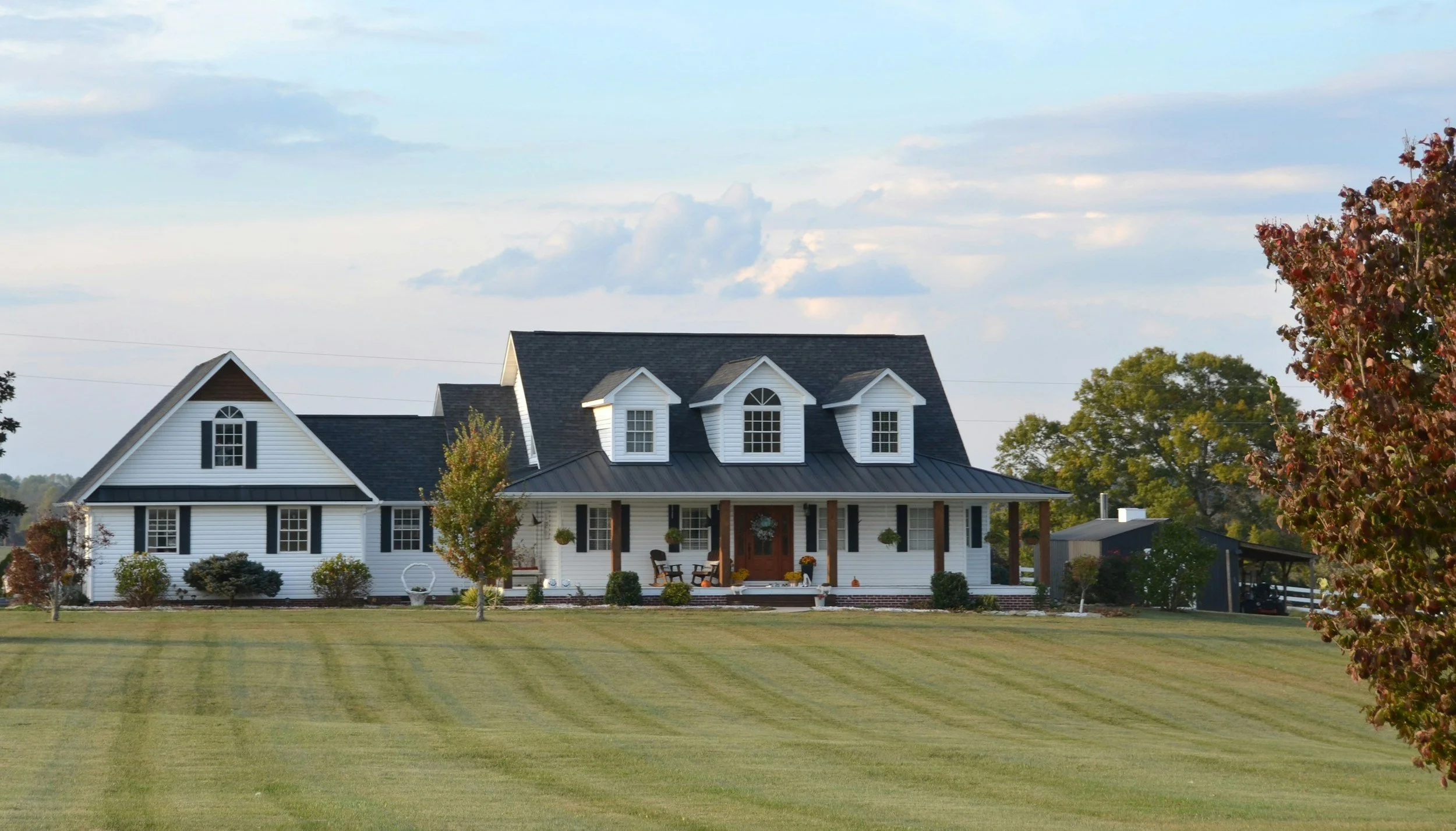
Homes With Acreage Near Rockwall TX
For buyers who want more room, more privacy, or simply more flexibility than a typical subdivision lot can provide, homes with acreage can be found throughout Rockwall County and in several nearby North Texas communities.
Acreage properties can range from homes on one- or two-acre lots to larger tracts with barns, workshops, guest houses, pasture, pools, or space for future improvements. Buyers can also find everything from established country properties to luxury estates and new custom homes on larger homesites.
But buying acreage is different from buying a home in a traditional neighborhood. Property boundaries, utilities, septic systems, deed restrictions, access, drainage, floodplain, and land-use rules can all affect how a property can be used.
That makes it especially important to evaluate the specific property, not simply the number of acres shown in the listing.
Looking for more space? The McCoy Group can help you explore acreage homes in Rockwall County and surrounding North Texas communities.
Where to Find Homes With Acreage Near Rockwall
Buyers looking for acreage near Rockwall have options both inside Rockwall County and in communities farther east and northeast of the Dallas-Fort Worth area.
The type of property available can vary significantly by location. Some areas offer established homes on several acres, while others have newer large-lot subdivisions, custom-home communities, working land, or properties outside city limits.
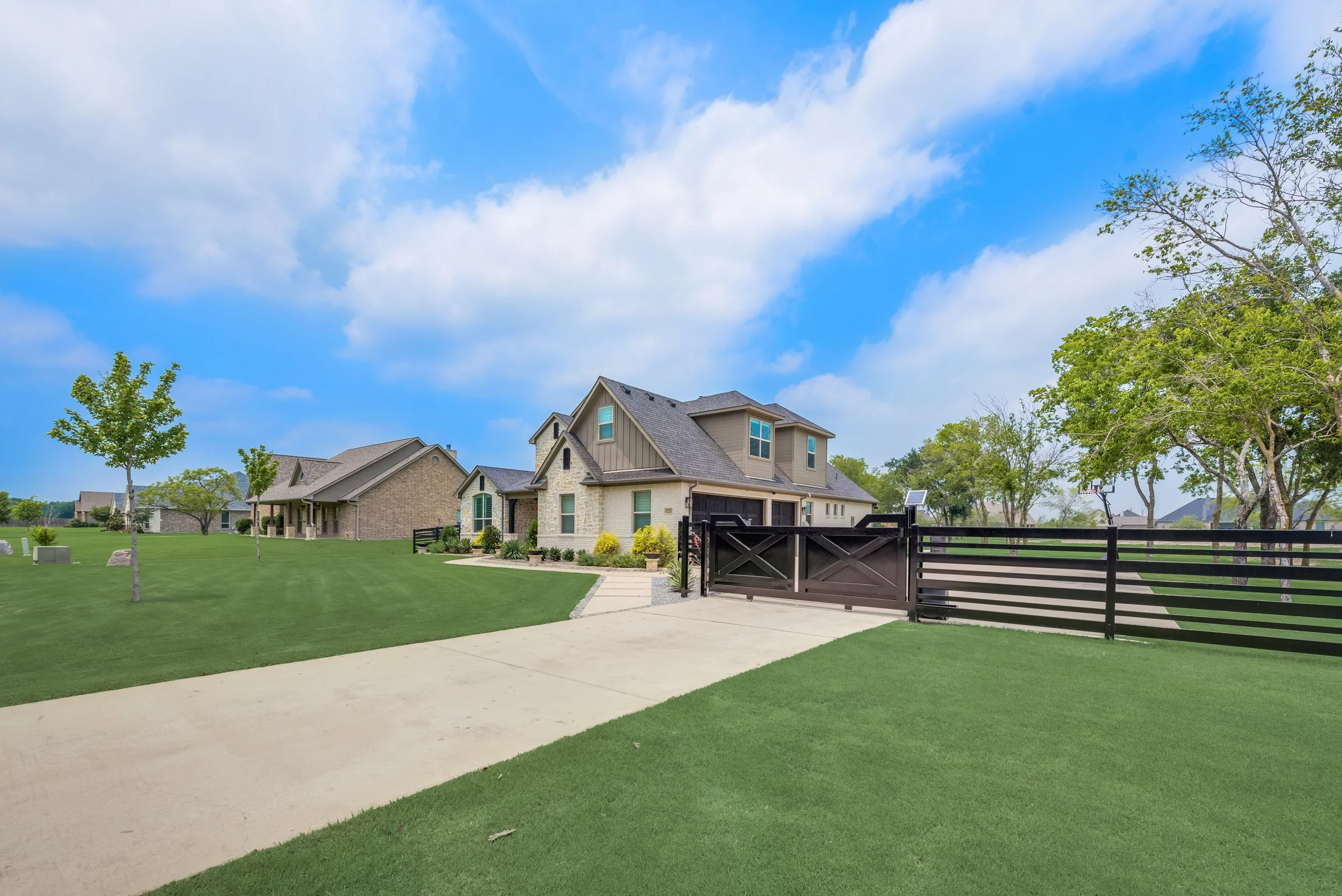
Rockwall County
Rockwall County offers a mix of suburban neighborhoods, luxury properties, custom homes, and larger homesites, particularly as buyers move away from the more densely developed areas of Rockwall and toward the eastern and southern portions of the county.
Areas around McLendon-Chisholm and Royse City can offer opportunities for larger lots and acreage while still providing relatively convenient access to Rockwall, Interstate 30, schools, shopping, and Lake Ray Hubbard.
Acreage within Rockwall County can command a premium because the county is relatively small and developable land has become increasingly limited.
McLendon-Chisholm
McLendon-Chisholm is one of the first places many buyers consider when looking for more land while remaining close to Rockwall.
The area includes established acreage properties, estate-style homes, custom residences, and newer communities with larger homesites. Depending on the property, buyers may find room for pools, workshops, detached garages, outdoor living areas, or other improvements.
Properties can differ considerably in utilities, deed restrictions, HOA requirements, and whether they are located within city limits, an ETJ, or another jurisdiction, so property-specific research is important.
Royse City
Royse City covers a large geographic area and offers a broad range of housing, including traditional subdivisions, larger residential lots, and acreage properties.
Buyers may find homes on several acres in more rural portions of the area while remaining within driving distance of Interstate 30 and the growing commercial corridors around Royse City and Rockwall.
Because development continues throughout the area, buyers should pay attention not only to the property they are purchasing but also to surrounding land use and future development.
Acreage Just Outside Rockwall County
Caddo Mills
Caddo Mills can be especially appealing to buyers looking for more land east of Rockwall County.
The area includes newer homes on larger lots, established acreage properties, custom homes, and rural tracts. Buyers who prioritize space for workshops, animals, recreational vehicles, or simply more distance between neighboring homes may find additional options here compared with more developed suburban communities closer to Dallas.
Farmersville
Farmersville combines historic small-town character with rural land and acreage surrounding the city.
Beyond its traditional downtown and established residential areas, buyers can find larger properties, country homes, and land outside the more developed parts of town. Farmersville can be worth considering for buyers who are comfortable living farther from Rockwall in exchange for additional land and a more rural setting.
Greenville
Greenville offers one of the widest ranges of property types in the areas east of Rockwall, from historic homes near downtown to subdivisions, larger residential lots, and rural acreage.
Because Greenville is the county seat of Hunt County and serves a much larger surrounding area, buyers can find properties that feel suburban as well as homes on substantial acreage outside the city's more developed areas.
What Does “Acreage” Mean?
There is no single definition of an acreage home.
For one buyer, a one-acre property may provide all the extra space they want. Another buyer may be searching specifically for five, ten, or more acres.
Properties marketed as acreage may include:
Homes on approximately one acre or more
Estate-size residential lots
Country homes
Horse or equestrian properties
Properties with barns or workshops
Homes with guest houses or additional structures
Custom homes on private lots
Properties with pasture or wooded land
Larger tracts with an existing residence
The usable acreage can matter just as much as the total acreage.
Creeks, ponds, floodplain, drainage areas, easements, utility corridors, topography, and access can all affect how much of a property can realistically be used for what a buyer has in mind.
Acreage vs. a Large-Lot Neighborhood
Buyers sometimes use “acreage” and “large lot” interchangeably, but the ownership experience can be very different.
A home on one or two acres within a planned community may still have an HOA, architectural requirements, municipal utilities, paved streets, and significant deed restrictions.
A similarly sized property outside a subdivision may have fewer neighborhood amenities but could offer greater privacy or flexibility. It may also rely on a septic system, private well, propane, rural utility providers, or privately maintained access.
Neither option is automatically better.
For buyers who primarily want more yard and more distance between homes, a large-lot community may provide the right balance.
Buyers who want animals, barns, workshops, additional structures, or greater control over how the land is used may need to look more carefully at unrestricted or less-restricted acreage.
What Buyers Should Know Before Buying Acreage
Acreage properties require additional due diligence because the land itself becomes a much larger part of the purchase.
Survey and Property Boundaries
A current survey can be especially important when purchasing acreage.
Fences do not necessarily represent legal property boundaries, and larger properties may contain easements, access agreements, utility corridors, pipelines, drainage areas, or other features that are not obvious during a showing.
Buyers should understand exactly what land is included with the property and whether another party has rights to use any portion of it.
Deed Restrictions and Land Use
Owning several acres does not necessarily mean the property can be used for anything the owner chooses.
Deed restrictions, city regulations, HOA rules, subdivision restrictions, easements, and other requirements may affect:
Horses or livestock
Barns
Workshops
Guest houses
Additional residences
Short-term rentals
Commercial activity
RV or boat storage
Fencing
Future construction
Buyers should verify whether their intended use is allowed before purchasing the property.
Septic Systems, Wells & Utilities
Many acreage properties outside more developed neighborhoods do not have the same utility infrastructure buyers may be accustomed to in a traditional subdivision.
A home may rely on an on-site septic system instead of municipal sewer service. Buyers should understand the type, location, capacity, maintenance history, and condition of the system.
Some rural properties may also use a private well, while others receive water through a rural water supply corporation or municipal provider.
Electric service, propane, natural gas, high-speed internet, trash collection, and other services can also vary by location.
For buyers planning a future workshop, pool, guest house, barn, or second residence, it is especially important to understand whether existing utilities can support those improvements.
Floodplain, Drainage & Ponds
More land also means more ground to evaluate.
Acreage properties may include creeks, ponds, drainage channels, low-lying areas, or portions located within a designated floodplain.
A property containing floodplain is not necessarily undesirable, but buyers should understand where it is located and how it could affect insurance, future construction, fencing, access, or other planned improvements.
Drainage should also be evaluated carefully, particularly when buildings, barns, driveways, or other improvements are located across a large site.
Agricultural Valuation and Property Taxes
Buyers will often hear acreage described as “ag exempt,” although Texas property-tax terminology is more accurately associated with special agricultural appraisal or valuation.
Not every property with acreage qualifies.
Eligibility generally depends on how the land is being used and whether applicable requirements are met. A change in use may also affect the property's future tax treatment and could potentially create additional tax consequences.
Buyers should verify the current appraisal classification directly with the appropriate county appraisal district and should not assume that a property's existing agricultural valuation will automatically continue after purchase.
Horses, Barns, Workshops & Additional Structures
One of the biggest reasons buyers look for acreage is flexibility.
A larger property may provide room for horses, a barn, workshop, detached garage, RV storage, guest quarters, or other improvements that are difficult to accommodate on a conventional subdivision lot.
But acreage alone does not guarantee those uses are allowed.
Before purchasing a property for a specific purpose, buyers should evaluate applicable deed restrictions, zoning or land-use requirements, setbacks, utilities, septic limitations, HOA rules, and permitting requirements.
If a barn, shop, guest house, or other structure already exists, buyers should also investigate its condition and any available permitting or documentation.
Buying a Home With Acreage for Horses
Buyers searching specifically for horse property should look beyond the acreage number.
Factors such as usable pasture, fencing, shade, water availability, barns, drainage, access for trailers, road conditions, and restrictions on animals can significantly affect whether a property actually works for horses.
Two five-acre properties can provide very different levels of usability.
For that reason, buyers searching for equestrian property should evaluate both the home and the land based on how they intend to use it.
Building a Custom Home on Acreage
Some buyers choose to purchase land or an older acreage property with the goal of eventually building a custom home.
This can provide more control over the homesite, orientation, architecture, outdoor living areas, and additional structures, but building on acreage involves considerations that are not always present in a traditional development.
Before purchasing land for construction, buyers should investigate:
Building restrictions
Utility availability
Septic requirements
Water access
Soil and site conditions
Floodplain and drainage
Driveway and road access
Easements
Site preparation
Building setbacks
Architectural or deed restrictions
The cost of preparing acreage for construction can be significant, so the price of the land should never be evaluated independently of the cost to make it buildable.
City Limits, ETJs & Rural Property
An acreage property's mailing address does not always tell buyers which rules apply to it.
Some properties may be inside city limits, while others may be located within a city's extraterritorial jurisdiction (ETJ) or in an unincorporated portion of the county.
That distinction can affect development requirements, permits, utilities, road maintenance, emergency services, taxes, and what improvements may be allowed.
Buyers should determine the property's actual jurisdiction rather than relying solely on the city shown in the mailing address or real estate listing.
Is an Acreage Home Right for You?
More land can provide privacy, flexibility, outdoor space, and opportunities that are difficult to find in a traditional neighborhood.
It can also mean more maintenance.
Buyers should consider the time and expense associated with mowing, fencing, tree care, driveway maintenance, septic service, well equipment, barns, ponds, drainage, pest control, and other property-specific responsibilities.
For some buyers, those responsibilities are a worthwhile tradeoff for more space and fewer nearby neighbors. Others may discover that a large-lot neighborhood provides many of the same lifestyle benefits with less upkeep.
The right choice depends on how you actually want to live and use the property.
Search Homes With Acreage Near Rockwall TX
Acreage properties near Rockwall can vary dramatically in location, condition, restrictions, utilities, improvements, and overall usability.
Whether you're looking for a home on one acre, a country property with a workshop, room for horses, a luxury estate, or several acres where you can build a custom home, we can help you identify properties that fit what you actually want to do with the land.
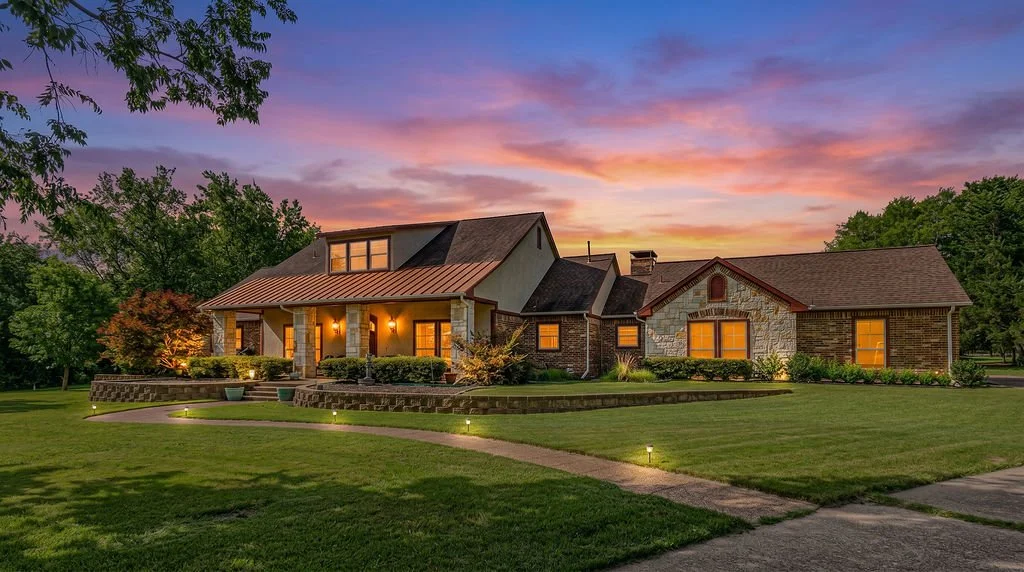
Buying Acreage With The McCoy Group
Buying an acreage property involves evaluating much more than the house itself.
At The McCoy Group, REALTORS®, we help buyers look at the complete property — including location, land, improvements, restrictions, utilities, access, surveys, and the practical considerations that can affect ownership after closing.
Our primary market is Rockwall County, and we also help buyers explore acreage opportunities in surrounding North Texas communities when additional land or a more rural setting is part of the goal.
Thinking about buying a home with acreage near Rockwall?
Contact The McCoy Group →
Frequently Asked Questions About Homes With Acreage Near Rockwall TX
Where can I find homes with acreage near Rockwall, Texas?
Buyers can find acreage properties throughout Rockwall County and in nearby areas such as McLendon-Chisholm, Royse City, Caddo Mills, Farmersville, and Greenville. Availability varies by location, and properties may range from homes on one or two acres to larger rural tracts.
Are there homes with one acre or more in Rockwall County?
Yes. Rockwall County includes homes on larger lots and acreage, particularly outside the more densely developed portions of Rockwall. McLendon-Chisholm and parts of Royse City are common areas for buyers seeking additional land while staying relatively close to Rockwall.
Can I have horses on acreage near Rockwall?
Possibly, but acreage alone does not guarantee that horses or other livestock are permitted. Buyers should verify deed restrictions, HOA rules, city regulations, property configuration, fencing, water availability, and other requirements before purchasing a property for equestrian use.
Do acreage homes usually have septic systems?
Many acreage properties outside municipal sewer service use an on-site septic system, although some properties may have access to public sewer. Buyers should verify the type, condition, maintenance history, and capacity of the septic system for the specific property.
Do acreage properties near Rockwall use private wells?
Some do, while others receive water from a city or rural water supply provider. Water service can vary considerably by location, so buyers should confirm the property's water source and available utility infrastructure before purchasing.
What does “ag exempt” mean on a Texas acreage property?
“Ag exempt” is commonly used to describe land receiving a special agricultural appraisal or valuation for property-tax purposes. Not every acreage property qualifies, and eligibility depends on how the land is used and applicable appraisal-district requirements. Buyers should verify the property's current status directly with the appropriate county appraisal district.
Can I build a shop, barn, guest house, or second home on acreage?
Maybe. Whether an additional structure is allowed depends on the property’s deed restrictions, HOA requirements, zoning or land-use regulations, setbacks, septic capacity, utilities, easements, and permitting requirements. Buyers should verify their intended use before purchasing.
Are there acreage homes near Rockwall without an HOA?
Yes. Some acreage properties are located outside planned subdivisions and may not have an HOA, while others are part of large-lot or estate communities with deed restrictions and association requirements. Buyers should verify the specific property rather than assuming acreage means no HOA.
What should I look for when buying a home with acreage?
In addition to evaluating the home itself, buyers should review the survey, property boundaries, easements, deed restrictions, floodplain, drainage, utilities, septic or well systems, road access, fencing, existing structures, and whether the property can support its intended use.
Is buying acreage more expensive to maintain?
It can be. Larger properties may require additional mowing, fencing, tree care, driveway maintenance, septic service, well maintenance, pond care, pest control, or upkeep of barns and other structures. Maintenance costs vary significantly depending on the land and improvements.